
Table of Contents
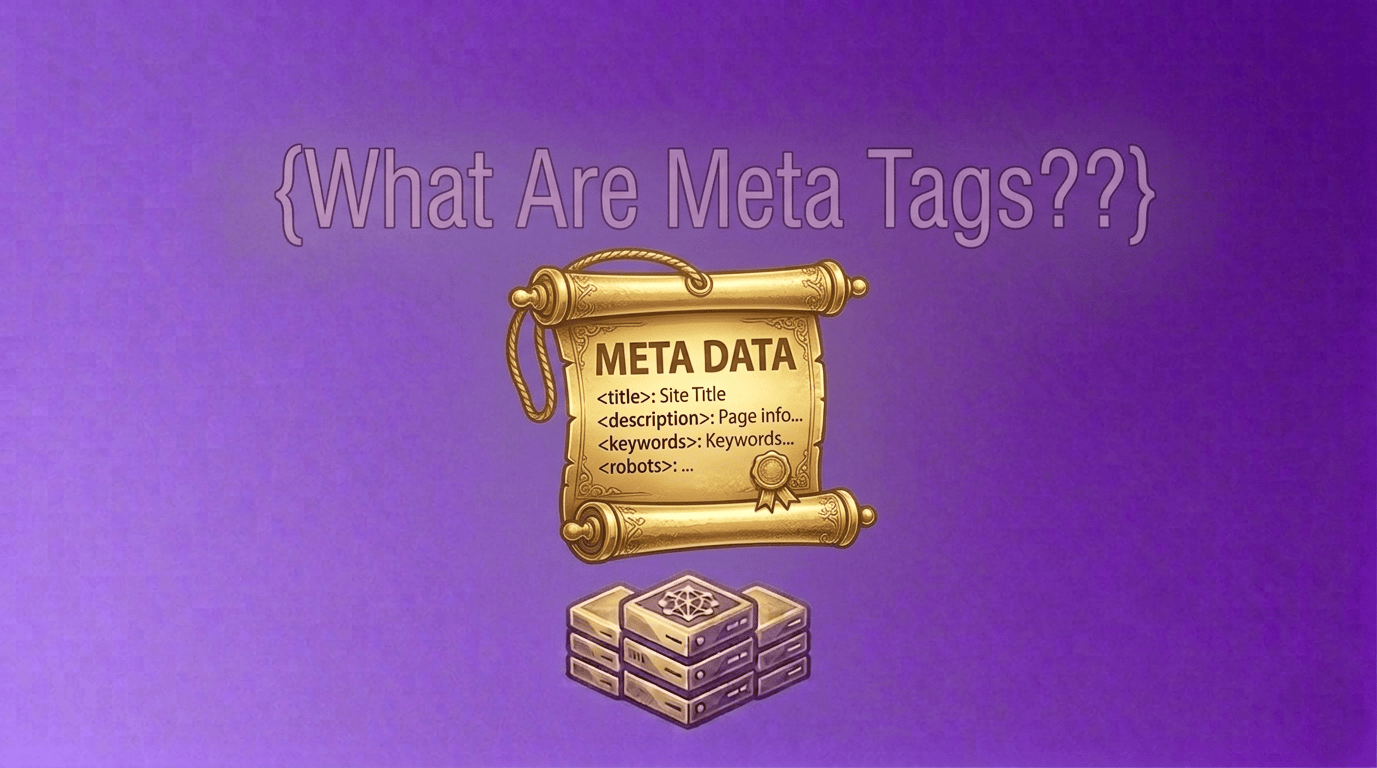
Meta tags are one of the most important elements of on-page SEO. If you’ve ever wondered what are meta tags, they are pieces of HTML code that provide information about a webpage to search engines and web browsers.
Although visitors usually do not see meta tags directly on a webpage, search engines use them to better understand page content, relevance, and purpose.
Understanding what are meta tags and how they work can help improve search visibility, click-through rates, and overall SEO performance.
Whether you run a blog, business website, online store, or tools platform, learning what are meta tags and why they matter is an important step toward better website optimization.
What Are Meta Tags?
If you’re asking what are meta tags, they are snippets of HTML code placed inside the <head> section of a webpage.
Meta tags provide information about a page to search engines and browsers.
Examples of information contained in meta tags include:
- page title
- page description
- indexing instructions
- character encoding
- social sharing information
In simple terms, what are meta tags can be answered as: HTML elements that help search engines understand webpages.
You can generate SEO-friendly meta tags using our Meta Tag Generator.Why Are Meta Tags Important?
Understanding what are meta tags is important because they influence how webpages appear in search results and how search engines interpret content.
Meta tags help:
- improve SEO
- increase click-through rates
- provide page information
- control indexing behavior
- improve user experience
Without proper meta tags, search engines may struggle to understand the purpose of a webpage.
Benefits of Meta Tags
Better Search Visibility
Meta tags help search engines display relevant titles and descriptions in search results.
Improved Click-Through Rate (CTR)
Well-written meta descriptions encourage users to click on your website.
Better Indexing
Meta tags help search engines understand whether a page should be indexed or not.
Control Over Search Appearance
Meta tags allow you to control how your page appears in search results.
Social Media Optimization
Meta tags also help control how your content appears when shared on platforms like Facebook and Twitter.
Types of Meta Tags in SEO
When learning what are meta tags, it is important to understand the different types available.
1. Meta Title Tag
The meta title tag defines the title of a webpage.
It is one of the most important SEO ranking factors.
Example:
<title>What Are Meta Tags in SEO?</title>The title appears in:
- search engine results
- browser tabs
A good title should be:
- clear
- relevant
- keyword optimized
2. Meta Description Tag
The meta description provides a short summary of the webpage.
Example:
<meta name="description" content="Learn what meta tags are in SEO, how they work, and why they are important for search visibility and rankings.">Although it is not a direct ranking factor, it strongly influences click-through rate.
3. Meta Robots Tag
The robots meta tag tells search engines how to crawl or index a page.
Example:
<meta name="robots" content="index, follow">Common values include:
- index → allow indexing
- noindex → prevent indexing
- follow → follow links on page
- nofollow → ignore links
4. Viewport Meta Tag
The viewport tag controls how a webpage appears on mobile devices.
Example:
<meta name="viewport" content="width=device-width, initial-scale=1.0">This is essential for mobile-friendly design and responsive websites.
5. Meta Keywords Tag (Deprecated)
The meta keywords tag was used in the past to define page keywords.
Example:
<meta name="keywords" content="SEO, meta tags, website optimization">Today, it is no longer important for Google ranking.
Meta Tags and SEO Ranking
Meta tags help SEO in several ways:
- improve search engine understanding
- improve click-through rates
- control indexing behavior
- enhance user experience in search results
However, meta tags alone do not guarantee high rankings. They must be combined with:
- quality content
- internal linking
- technical SEO
- backlinks
Meta Tags vs Other SEO Elements
Meta Tags vs Robots.txt
Meta tags control individual pages, while robots.txt controls website-wide crawling rules.
Meta Tags vs XML Sitemap
Meta tags provide page-level information, while sitemaps help search engines discover URLs.
You can read more in our XML Sitemap guide.Meta Tags vs Canonical Tags
Meta tags define page metadata, while canonical tags prevent duplicate content issues.
You can use our Canonical Tag Generator for implementation.Common Meta Tag Mistakes
Missing Meta Description
Pages without descriptions may show random text in search results.
Duplicate Titles
Multiple pages with the same title confuse search engines.
Overstuffing Keywords
Keyword stuffing can harm SEO performance.
Incorrect Robots Tag
Wrong indexing rules can block pages from search engines.
How to Optimize Meta Tags
Write Unique Titles
Every page should have a unique SEO title.
Use Clear Descriptions
Write descriptions that encourage users to click.
Include Primary Keywords
Use natural keyword placement, not stuffing.
Keep It User-Focused
Meta tags should improve user experience, not just SEO.
Use Our Meta Tag Generator
Creating optimized meta tags manually can be time-consuming.
You can easily generate SEO-friendly tags using our free Meta Tag Generator.This tool helps you:
- create SEO titles
- generate meta descriptions
- improve search visibility
- optimize website pages
Frequently Asked Questions
What are meta tags in SEO?
Meta tags are HTML elements that provide information about a webpage to search engines.
Do meta tags affect SEO ranking?
Meta tags help SEO indirectly by improving indexing and click-through rates.
Where are meta tags placed?
Meta tags are placed inside the <head> section of a webpage.
Are meta keywords still important?
No, meta keywords are no longer used by major search engines for ranking.
What is the most important meta tag?
The meta title and meta description are the most important for SEO.
Conclusion
Now that you understand what are meta tags, you can see why they are a critical part of on-page SEO. Meta tags help search engines understand webpage content, improve search result appearance, and support better user engagement.
Whether you’re optimizing a blog, business website, , or tools platform, understanding what are meta tags and implementing them correctly can contribute to stronger SEO performance.
When combined with robots.txt files, XML sitemaps, and canonical tags, meta tags become an essential part of a well-optimized website.
Related Tools
Meta Tag Generator Robots.txt Generator XML Sitemap Generator Canonical Tag GeneratorRelated Articles
What Is Robots.txt and Why Is It Important?What Is XML Sitemap and Why Is It Important?
What Is Canonical Tag and Why Is It Important?
About the Author
Last updated: June 2026