
Table of Contents
JSON has become one of the most important data formats used on the internet today. Whether you’re browsing a website, using a mobile application, connecting to an API, or working with modern web technologies, there’s a good chance JSON is being used behind the scenes.
If you’ve ever wondered what is JSON and how does it work, you’re not alone. JSON is a fundamental concept in web development, software engineering, APIs, and data exchange. Understanding how it works can help developers, website owners, students, and technical professionals work more effectively with modern applications.
In this guide, you’ll learn what is JSON and how does it work, why it is widely used, how JSON is structured, real-world examples of JSON in action, common mistakes beginners make, and how tools can help you format and validate JSON data.
What Is JSON?
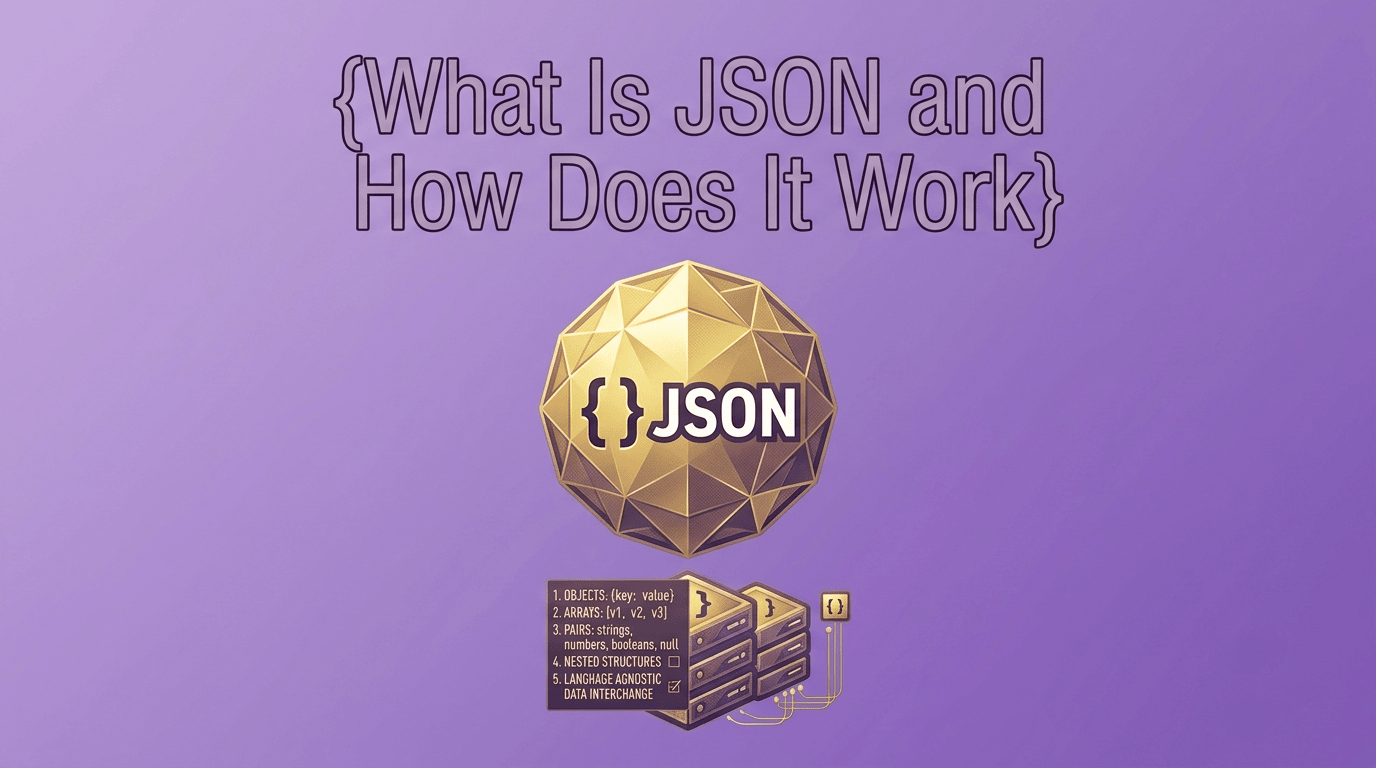
JSON stands for JavaScript Object Notation. It is a lightweight data-interchange format designed for storing and exchanging structured information.
Although JSON originated from JavaScript, it is now supported by almost every modern programming language including Python, PHP, Java, C#, Ruby, Go, and many others.
JSON is popular because it is:
- Easy for humans to read
- Easy for machines to parse
- Lightweight and efficient
- Widely supported across platforms
- Ideal for APIs and data exchange
When people ask what is JSON and how does it work, the simplest answer is that JSON provides a structured way to represent and transfer data between systems.
Why JSON Is Important
Modern applications constantly exchange information.
For example:
- Websites request data from servers
- Mobile apps retrieve user information
- Payment gateways process transactions
- Weather apps retrieve forecast data
- Social media platforms exchange content
JSON acts as the common language that allows these systems to communicate efficiently.
Without formats like JSON, transferring structured information between different technologies would be much more difficult.
How Does JSON Work?
Understanding what is JSON and how does it work requires understanding its basic structure.
JSON organizes information into key-value pairs.
Example:
{
  "name": "John",
  "age": 30,
  "city": "London"
}
In this example:
- name is the key
- John is the value
- age is the key
- 30 is the value
Applications can easily read and process this structured information.
Basic JSON Syntax
JSON follows a few simple rules.
Objects Use Curly Braces
{
  "name": "John"
}
Keys Must Use Double Quotes
Correct:
{
  "name": "John"
}
Incorrect:
{
  name: "John"
}
Data Uses Key-Value Pairs
{
  "country": "USA"
}
Items Are Separated by Commas
{
  "name": "John",
  "age": 30
}
Following these rules ensures JSON remains valid and machine-readable.
JSON Data Types
JSON supports several data types.
String
{
  "name": "John"
}
Number
{
  "age": 30
}
Boolean
{
  "active": true
}
Array
{
  "skills": ["HTML", "CSS", "JavaScript"]
}
Object
{
  "address": {
    "city": "London",
    "country": "UK"
  }
}
Null
{
  "middleName": null
}
Real-World Example of JSON
Imagine you use a weather application.
When the app requests weather information from a server, the server may respond with JSON data like this:
{
  "city": "Karachi",
  "temperature": 34,
  "condition": "Sunny"
}
The application reads the JSON response and displays the weather information to the user.
This is one of the most common examples used to explain what is JSON and how does it work in real-world applications.
JSON and APIs
JSON is heavily used in APIs (Application Programming Interfaces).
APIs allow applications to communicate with each other.
For example:
- Payment APIs
- Weather APIs
- Social media APIs
- Mapping APIs
- E-commerce APIs
Most modern APIs send and receive data using JSON because it is lightweight and universally supported.
Why Developers Prefer JSON
Easy to Read
JSON is significantly easier to read than many older data formats.
Lightweight
Smaller file sizes help improve performance.
Language Independent
JSON works with virtually every programming language.
Fast Processing
Applications can parse JSON quickly.
Excellent API Support
Most modern APIs rely on JSON as their default data format.
JSON vs XML
Before JSON became dominant, XML was commonly used for data exchange.
| Feature | JSON | XML |
|---|---|---|
| Easy to Read | Yes | Moderate |
| Lightweight | Yes | No |
| API Usage | Very Common | Less Common |
| File Size | Smaller | Larger |
Today, JSON is generally the preferred format for most web applications and APIs.
Common JSON Errors
Beginners learning what is JSON and how does it work often encounter syntax errors.
Missing Commas
{
  "name": "John"
  "age": 30
}
Missing Quotes
{
  name: "John"
}
Trailing Commas
{
  "name": "John",
}
Unmatched Brackets
Opening and closing brackets must always match.
These errors can prevent applications from reading JSON correctly.
How to Format JSON
As JSON files become larger, readability becomes more important.
Our JSON Formatter helps organize JSON structure automatically, making it easier to read and troubleshoot.
You can also learn more in our guide:
How to Validate JSON
Formatting improves readability, but validation checks whether JSON is syntactically correct.
Our JSON Validator helps identify errors such as:
- Missing commas
- Missing quotation marks
- Incorrect nesting
- Invalid syntax
For a complete tutorial, read:
How to Validate JSON and Fix Errors
Who Should Learn JSON?
JSON is valuable for:
- Web developers
- Software engineers
- API developers
- Data analysts
- Students
- Website owners
- Technical marketers
Even non-programmers often encounter JSON while working with website integrations and APIs.
Frequently Asked Questions
What is JSON and how does it work?
JSON is a lightweight data format used to store and exchange structured information between systems and applications.
What does JSON stand for?
JSON stands for JavaScript Object Notation.
Why is JSON so popular?
JSON is easy to read, lightweight, fast, and supported by nearly every modern programming language.
Is JSON a programming language?
No. JSON is a data-interchange format, not a programming language.
How do I check if JSON is valid?
You can use a JSON Validator tool to verify syntax and identify errors.
Conclusion
Understanding what is JSON and how does it work is an essential step for anyone interested in web development, APIs, data exchange, or modern software systems. JSON provides a simple, efficient, and universally supported way to represent structured information.
Because of its readability, flexibility, and widespread adoption, JSON has become the standard format for communication between applications and services. Whether you’re building websites, working with APIs, or learning development fundamentals, JSON is a skill worth mastering.
To continue learning, explore our JSON tools and tutorials to practice formatting, validating, and working with JSON data in real-world scenarios.
Related Tools
Related Articles
About the Author
Fadi is the founder of Prime Toolbox, where he publishes educational content about developer tools, business calculators, SEO resources, and practical web development guides. His mission is to make technical topics easier to understand through beginner-friendly tutorials and useful online tools.
Last Updated: June 2026